
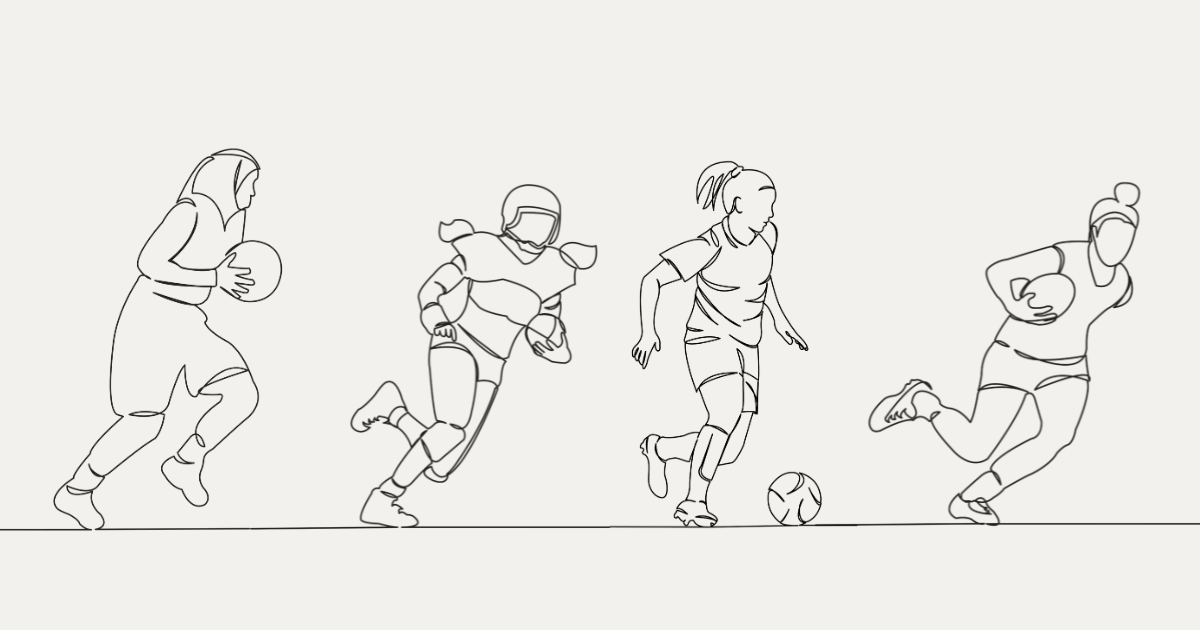
Women’s professional sports are expanding! In recent years, we have seen leagues created to highlight the talent of women in hockey, soccer, lacrosse, and baseball. This means more opportunities to see exciting, breath-holding plays – and importantly, increased representation in the sports we love.
The expansion of women’s professional sports also raises the interesting topic of unionization in women’s sports through players associations. These players associations represent the interest of these athletes to ensure they are well paid, have health care when injuries inevitably occur, and have access to programs after they retire.
In light of these new women’s professional sports leagues, we’re is introducing a new series celebrating the feat of organizing in women’s professional sports.
In this series, we will cover:
- The tireless work of women athletes based in North America to band together and advance their interests through players associations over time;
- Common themes involved in the most recent collective bargaining agreements of two players’ associations: the National Women’s Soccer League Players Association, and the Professional Women’s Hockey League Players Association;
- Potential paths for athletes in these new sports leagues to develop players associations and negotiate collective agreements, using the Northern Super League as an example.
Part I: The History of Organizing in North American Women’s Professional Sports
While women have always played sports, they have not always had equal opportunity. Women competed in the second modern Olympics in 1900 in the disciplines of tennis and golf. While participation in the Olympics has reached near equality, the same cannot be said for professional sports.
Women’s professional sports leagues remain in their infancy compared to men’s professional sports leagues.
The first leagues were the All-American Girls Professional Baseball league (between 1943 and 1954), and the Women’s Professional Basketball League (between 1978 and 1981). Neither of these leagues had players associations or players unions. It was not until the 1990s that professional women’s sports began to organize.
The WNBA’s full court press for player rights
The first sport to organize was women’s basketball. The Women’s National Basketball Association (WNBA) was founded in 1996 and started playing in 1997. At the end of their second season, the players began to protest their poor salaries, the lack of health care benefits, non-existent retirement plan, and poor revenue sharing. The Women’s National Basketball Players Association (WNBPA) was born out of this struggle in 1998.
In their first collective bargaining agreement (CBA) in 1999, the WNBPA increased the minimum salaries for rookies by 75% and for veterans by 100%, established year-round health care benefits, a retirement plan, maternity leave, and a revenue sharing agreement. A monumental improvement for players.
In 2003, the WNBPA used their collective might to threaten a strike that delayed the start of the preseason in an effort to make further gains for players. In the 2003 CBA, the WNBPA negotiated the first free agency rights in the history of women’s professional sports. After successive CBAs, in 2020, the WNBPA negotiated to raise the minimum salary floor again, improved the childcare assistance program, maternity leave, family planning support (including adoption surrogacy and fertility treatment), revenue sharing, and travel standards. At the time of writing this blog, the next CBA is being negotiated. Early reports suggest that the next CBA will include a significant jump in player salaries.
Women’s soccer takes its shot
More than 15 years after the WNBPA was established, soccer became the next arena for the expansion of women’s professional sports. In 2017, five years after the founding of the National Women’s Soccer League (NWSL), the players organized a players association the National Women’s Soccer League Players Association (NWSLPA).
The NWSLPA negotiated its first CBA in 2021 (ratified in 2022). This CBA established free agency rights, included increases to minimum wage, established revenue sharing as well as various leaves including mental health leave, and pregnancy and parental leave. The CBA also gave players the right to obtain a second opinion of an injury and the option to choose their own surgeon. These were big developments in ensuring the health and success of all athletes.
In 2024, the NWSLPA negotiated its second CBA, which included major gains for the players (and the fans). The 2024 CBA eliminated the NWSL draft, established free agency at the end of all players’ contracts, introduced guaranteed contracts, required player consent for all trades, and increased revenue sharing. This CBA continues through to 2030.
Women’s hockey goes on offense
In 2023, the Professional Women’s Hockey League Players Association (PWHLPA) was formed following the founding of the Professional Women’s Hockey League (PWHL). That same year, the PWHLPA negotiated its first CBA, which included a required minimum salary, yearly increases to salary, housing stipends, relocation reimbursements, as well as health insurance, a retirement plan, parental leave and pregnancy benefits. By harnessing the power of collective action, the PWHLPA made sure that players were starting their new league off on a strong and unified front.
New leagues and new opportunities
As popularity of women’s sports has grown, women’s sports fans (including us) are enjoying more professional leagues.
In 2025, the Women’s Lacrosse League played its first season with four teams in the United States. The Women’s Pro Baseball League was announced and its first season with four teams in the United States will be played in 2026.
Here in Canada, the Northern Super League began playing in 2025 with great success (including with many fans in this office – Go Rapid Go!).
None of these leagues have players associations (yet!) and there is an incredible opportunity for change to ensure that these extraordinary athletes have workplace protections.
Stay tuned for our next blog where we examine the common themes in the most recent collective bargaining agreements of the NWSLPA, and the PWHLPA.
Nelligan Law is grateful for the contribution of Kevin Arnel, Articling Student, in writing this blog post.