
The Progress of Labour Rights in Canada: Foundations of the Labour Movement
Recognizing the history behind workers’ rights in Canada
At Nelligan Law, our Labour Law team knows that the rights workers enjoy today were hard-fought through decades of advocacy, organization, and resilience. As proud advocates for unions, employees, and workers’ rights, we believe it’s important to recognize how far Canada has come, and how history continues to shape labour relations today.
In recognition of May Day (International Workers’ Day), we’re sharing a four-part series highlighting key moments in Canadian labour history. These events laid the foundation for collective bargaining, safer workplaces, and fair treatment – rights that still require protection and vigilance.
We begin with the early days, when organizing was considered a crime, yet workers stood together to demand better.

1872 – The Toronto Typographical Union Strike and the Legalization of Unions
In 1872, printers in Toronto—members of the Toronto Typographical Union—went on strike to demand a nine-hour workday. At that time, unions were considered illegal conspiracies under Canadian law, and striking workers risked arrest simply for organizing.
When 24 strike leaders were jailed, public outrage followed. A massive demonstration of over 10,000 people marched in support of the workers, which was an extraordinary turnout for the era. Recognizing the growing political pressure, Prime Minister John A. Macdonald’s government passed the Trade Unions Act, which legalized union activity in Canada.
Why It Matters:
This was Canada’s first major legal recognition of workers’ rights to organize. It set a precedent that collective action could lead to legislative change.
1919 – The Winnipeg General Strike: A Nation Takes Notice
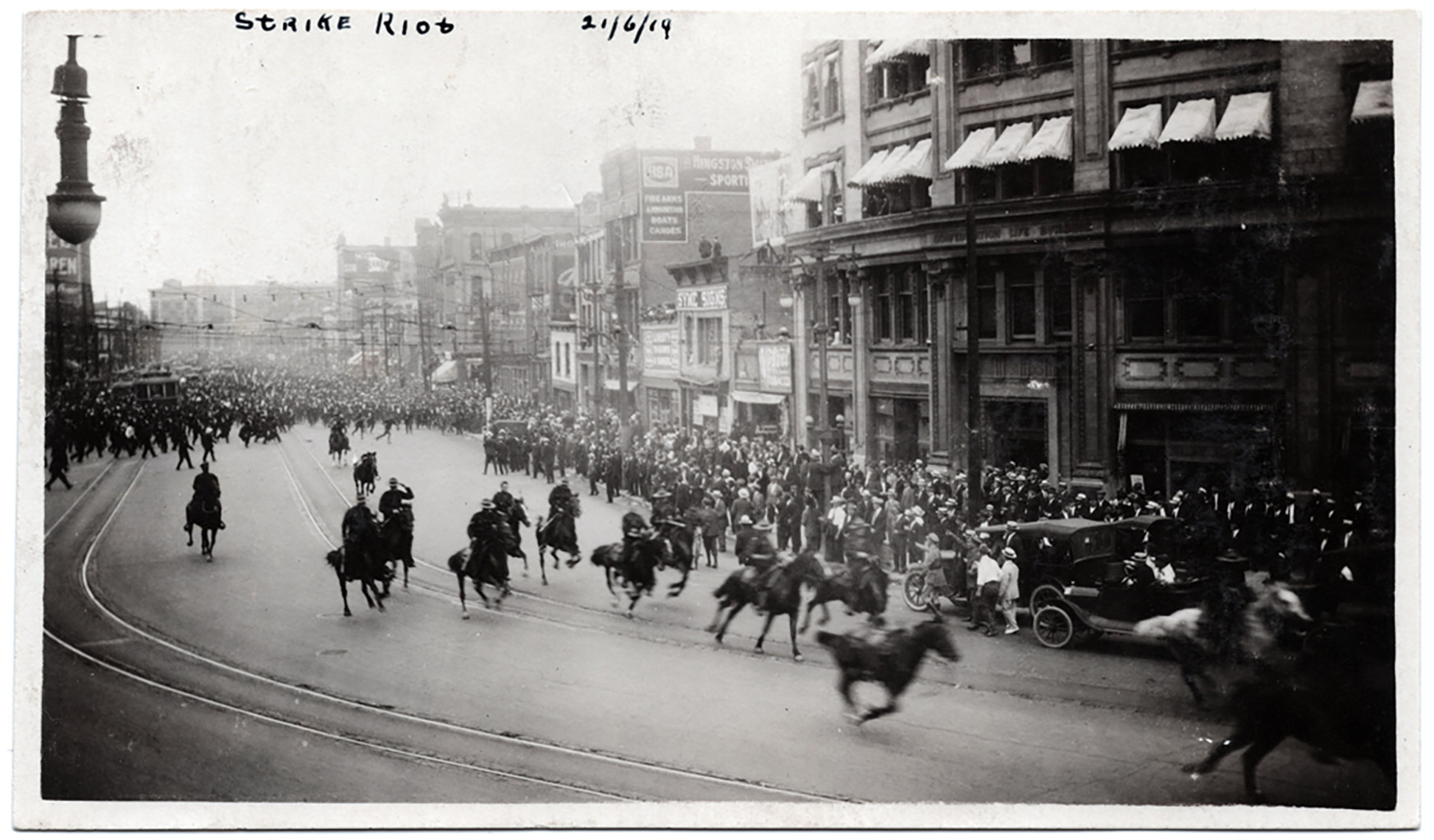
By 1919, workers across Canada were facing post-war inflation, unemployment, and poor working conditions. On May 15, more than 30,000 workers in Winnipeg (including metalworkers, builders, and public employees) launched what became known as the Winnipeg General Strike.
The strike effectively shut down the city for six weeks. Workers were demanding fair wages, better working conditions, and crucially, the right to collective bargaining.
Tensions escalated when authorities cracked down, leading to arrests and violence. The most infamous day, known as “Bloody Saturday”, saw the Royal Northwest Mounted Police charge into a crowd of strikers, resulting in deaths and injuries.
While the strike ended without immediate gains, it left a lasting legacy. Many of its leaders went on to influence politics and labour reform in Canada.
Why It Matters:
The Winnipeg General Strike became a symbol of worker solidarity and highlighted the need for formal recognition of collective bargaining rights. It also marked the beginning of organized labour as a political force in Canada.
Looking Back at Canada’s Labour Origins
These early events remind us that many rights we now view as fundamental, such as forming a union or negotiating fair wages, were once considered radical ideas. The courage shown by workers in 1872 and 1919 laid the groundwork for future progress.
At Nelligan Law, our Labour Law team is committed to upholding these hard-won rights. Whether advising unions, representing employees, or advocating for fair labour practices, we stand with those who continue the legacy of collective action.
Stay tuned as we continue this series, exploring how Canada’s labour rights evolved through legal recognition, mass mobilization, and modern challenges.
If you have questions about union rights, collective bargaining, or workplace protections, our team is here to help. Contact us at info@nelliganlaw.ca.